Residential Epoxy Flooring in Mansfield, TX
Transform your garage or space with durable, stylish epoxy flooring built to last.
Call Us: (682) 478-2177
Residential Epoxy Flooring in Mansfield, TX
Residential epoxy flooring gives homeowners a way to upgrade suitable concrete surfaces with a seamless resinous finish that can be designed for utility, appearance, or a combination of both. Rather than treating every room like a garage, a residential system should be chosen around how the space is used, how much sunlight reaches it, how much texture is appropriate, and what visual character fits the home. Mansfield sits in the southern portion of the Dallas-Fort Worth Metroplex and combines established neighborhoods, newer residential development, retail corridors, light industrial uses, schools, municipal facilities, and other commercial properties. North Texas conditions also put concrete through long periods of heat, strong sunlight, temperature swings, tracked-in grit, vehicle traffic, and occasional heavy rain. Those conditions make substrate evaluation, appropriate product selection, and careful installation especially important for coated concrete.
Professional Residential Epoxy Flooring Services in Mansfield
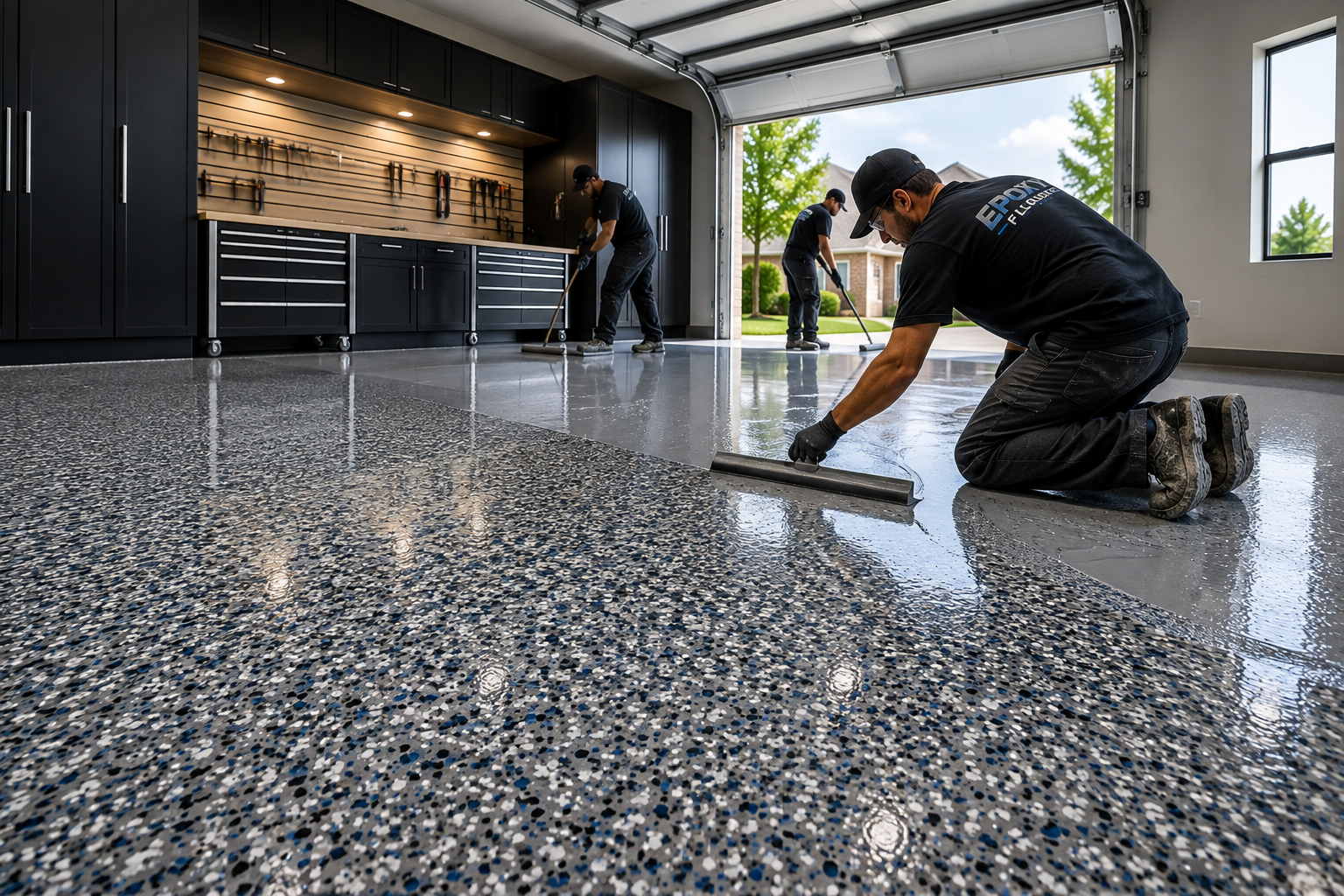
Mansfield Epoxy Flooring helps property owners evaluate coating options for concrete surfaces where residential epoxy flooring may be a good fit. The goal is not to cover every slab with the same product. A useful recommendation starts with the concrete itself and the demands placed on the finished floor. Residential epoxy should be treated as a flooring system, not simply as paint. Two-component materials cure through a chemical reaction, and successful installation depends on correct ratios, mixing, working time, substrate temperature, surface profile, and recoat windows. The finished appearance is only one part of the job; adhesion to the concrete is the foundation of performance.
Resinous flooring performs as a system. Preparation, repairs, primer selection, coating thickness, decorative media, topcoat, texture, temperature, humidity, and cure time all interact. That is why a professional proposal should explain more than a brand name or a single chemistry. It should make clear what is being installed, what preparation is included, and what conditions could change the scope.
Benefits of Residential Epoxy Flooring
- Provides a seamless surface with fewer grout lines or joints to collect dust and debris.
- Can transform utilitarian concrete into a more finished-looking surface for workshops, utility areas, hobby rooms, and other suitable spaces.
- Offers broad design flexibility through pigments, flakes, metallic effects, and compatible topcoats.
- Can improve cleanability compared with porous unfinished concrete.
- Allows the coating build, texture, sheen, and topcoat to be tailored to the room rather than using a one-size-fits-all floor.
These benefits depend on choosing a system appropriate for the substrate and service environment. No coating makes damaged concrete structurally new, and no finish is maintenance-free. The value comes from combining sound preparation with a coating assembly that fits the space.
Local Considerations for Mansfield Concrete
North Texas heat and sunlight can influence both installation conditions and long-term material selection. Exterior or sun-exposed areas may benefit from coatings chosen for UV stability, while indoor projects still need attention to slab temperature, humidity, and ventilation during installation. Concrete can also carry moisture from below or retain contaminants from years of use. Those conditions should be evaluated before a tightly bonded, relatively impermeable resinous floor is installed.
Mansfield's continued residential and commercial growth means coating projects can involve everything from newer garage slabs to older service spaces and renovated retail properties. New concrete is not automatically ready for coating, and old concrete is not automatically unsuitable. The important questions are whether the slab has cured sufficiently for the selected product, whether it is sound, whether treatments or sealers are present, and what preparation is required.
Where Residential Epoxy Flooring Makes Sense
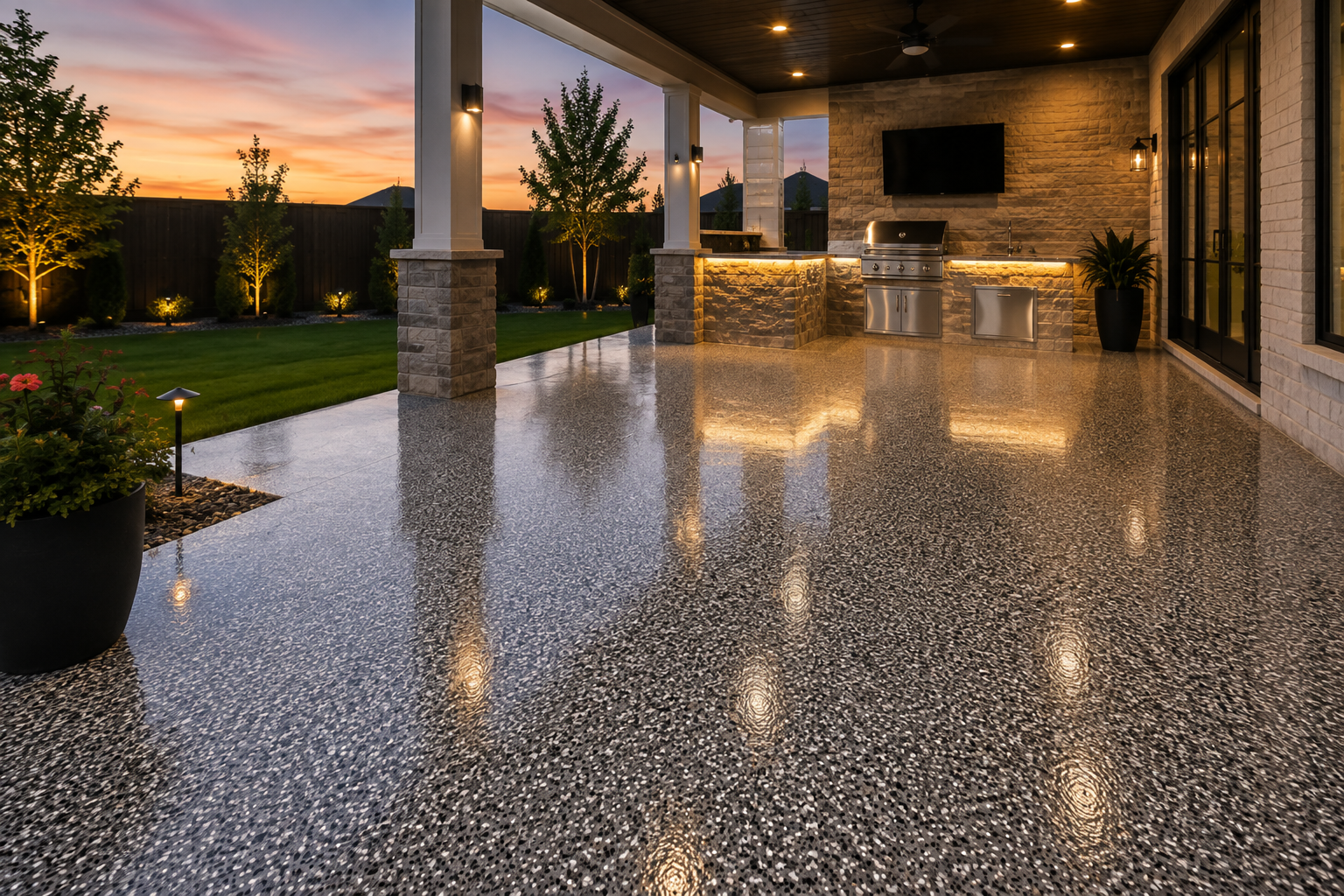
Residential epoxy is commonly considered for garages, workshops, utility rooms, home gyms, hobby areas, storage spaces, and certain interior concrete floors. Suitability depends on the substrate and environment. Areas with significant direct sunlight, moisture concerns, or unusual movement may call for a different topcoat or another resinous system.
Residential Applications
Homeowners often compare epoxy with tile, polished concrete, luxury vinyl, or leaving concrete unfinished. Epoxy is especially attractive where a seamless, durable surface is desired and the existing concrete is a suitable substrate. It is less appropriate when the slab has unresolved moisture, significant structural movement, or conditions outside the selected product's limitations.
Commercial Applications
Although this page focuses on homes, the same resinous-flooring principles appear in commercial work. The difference is specification: commercial facilities may require heavier builds, more aggressive texture, chemical resistance, cove bases, line markings, or documented performance criteria.
Materials, Systems, and Finish Options
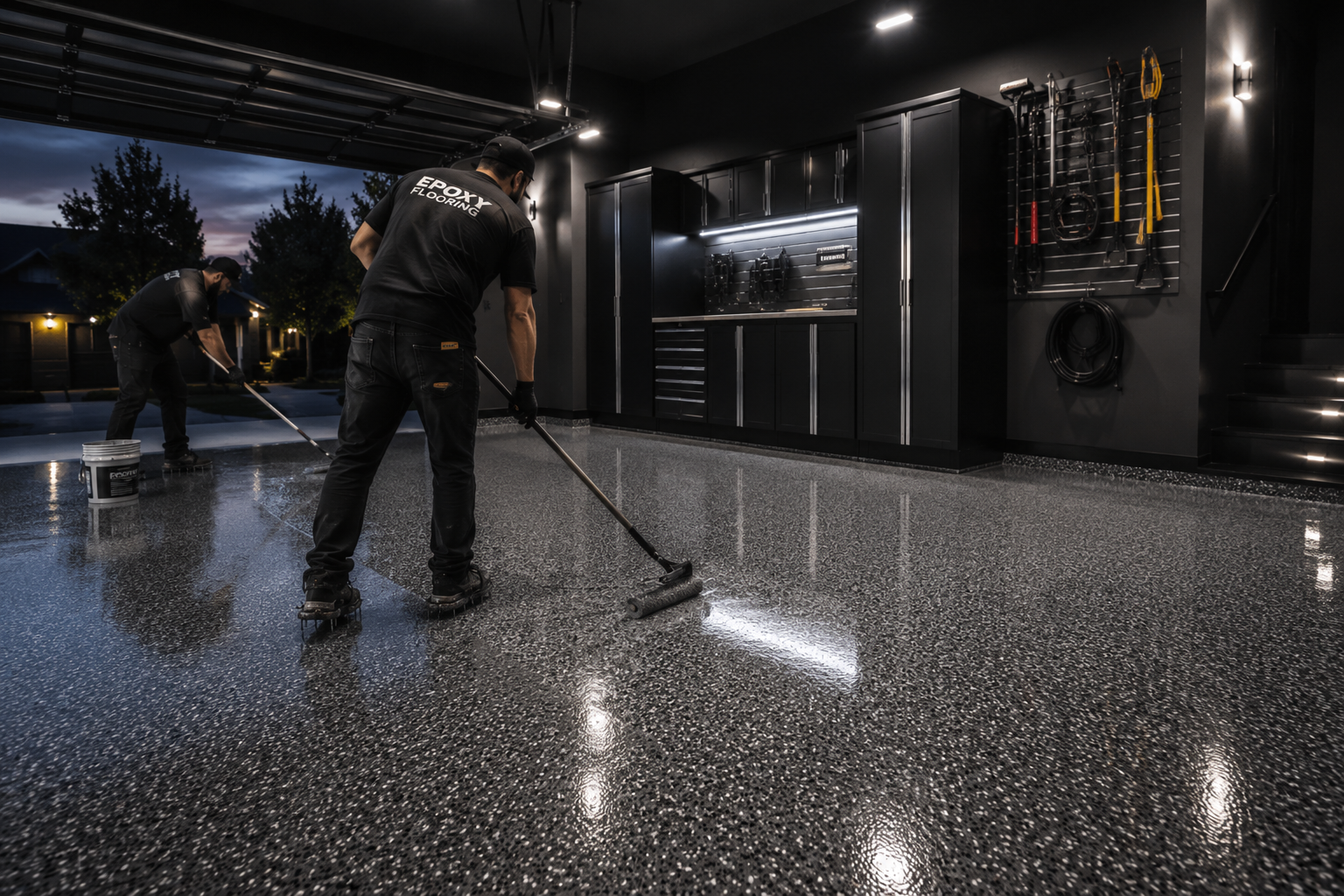
Options range from solid-color epoxy systems to decorative flake broadcasts and metallic designs. Some assemblies use epoxy for primer and body coats with polyurethane or polyaspartic topcoats for additional wear or color stability. Texture can be adjusted, and gloss can range from highly reflective to more subdued depending on available products.
Customers should also think about texture and sheen. A high-gloss surface can make colors look deeper and reflect more light, but it may show dust, scratches, or water spotting more readily. Added aggregate can improve traction, but excessive texture can make mopping or squeegeeing more difficult. The best finish balances appearance, cleaning, and the likelihood of wet or oily conditions.
Why Concrete Surface Preparation Matters
Coating adhesion begins below the visible finish. Concrete should be clean, sound, and appropriately profiled. Mechanical grinding or shot blasting is commonly used in professional resinous-floor work because it can remove weak surface material, open the concrete, and create a controlled profile. Preparation may also include degreasing, removal of old coatings or sealers, vacuuming, crack repair, patching, and edge work.
Moisture is another important variable. A slab can look dry at the surface while still transmitting moisture vapor. Excess moisture can contribute to blistering, loss of adhesion, or other failures in some systems. The appropriate test and acceptable limits depend on the product and project. A responsible contractor should recognize moisture as a design consideration rather than assuming every concrete slab is the same.
Planning the Floor Around Real-World Use
Before selecting commercial epoxy flooring, list the conditions the floor will see during a normal week and during its hardest season. Consider rolling loads, parked vehicles, wet shoes, pets, dropped tools, cleaning chemicals, sunlight, storage racks, and how often the area can be emptied for maintenance. This use profile helps separate must-have performance features from purely cosmetic upgrades.
It is also useful to decide what imperfections are acceptable. Resinous flooring can create a dramatic visual improvement, but it follows the underlying slab and is not a substitute for rebuilding concrete. Repairs may remain subtly visible, control joints may still be part of the floor, and hand-applied decorative effects naturally vary. Discussing those realities before work begins produces a more accurate scope and a finish that matches expectations.
Finally, plan the room around cure and re-entry. Items stored on the slab must be moved, wall edges and door transitions need access, and vehicles or equipment may need alternate parking. Temperature and humidity can change cure speed, so return-to-service should be based on the installed product rather than a generic promise. A little logistical planning protects the new floor during the stage when it is most vulnerable.
A Typical Professional Residential Epoxy Flooring Process
Consultation and use assessment
Discuss how the space is used, desired appearance, traffic, sunlight, cleaning, downtime, and any known slab history.
Concrete inspection
Evaluate the substrate for previous coatings, contamination, cracks, spalling, moisture concerns, weak concrete, and other conditions that can affect adhesion.
Surface preparation
Mechanically prepare the concrete as appropriate for the selected system. The objective is a clean, sound surface with the profile needed for the coating to bond.
Repairs and detailing
Address suitable cracks, pits, spalls, edges, penetrations, and transitions. Moving joints or structural issues may require special treatment rather than simply being coated over.
Coating installation
Apply the primer, base coat, broadcast media, body coat, or decorative layer according to the selected system, observing mix ratios, coverage, working time, and recoat windows.
Topcoat and texture
Apply compatible protective topcoats and traction texture where specified. The topcoat often plays a major role in wear, gloss, cleanability, and UV performance.
Cure and handoff
Keep traffic off the floor until the system reaches the required cure stage, then review basic cleaning and maintenance practices
Why Professional Installation Matters
Resinous coatings are time-sensitive materials. Two-component products must be proportioned and mixed correctly, then applied within a limited working period. Installers also have to manage edges, roller overlaps, squeegee rates, decorative broadcasts, recoat windows, and changing temperature conditions. A mistake in the first layer may not become obvious until later coats are installed.
Professional installation is also valuable because the difficult work often happens before the coating bucket is opened. Removing contamination, identifying weak concrete, selecting the right surface profile, treating cracks, and deciding how to handle an old coating can have more influence on long-term adhesion than the final color. Choosing solely by the lowest price can hide differences in preparation and system build that are not obvious from a short proposal.
Choosing a Residential Epoxy Flooring Contractor in Mansfield, TX
Ask prospective contractors to describe the substrate-preparation method, not simply say the floor will be 'prepped.' Find out how existing paint, oil, cracks, moisture concerns, and damaged concrete will be handled. Ask what materials are used in each layer, why that system fits the space, and what texture and sheen are included. For decorative work, discuss how samples relate to the final floor and where natural variation should be expected.
A useful estimate should also address access and cure time. Know when foot traffic, storage, vehicles, carts, or equipment can return. If the project is commercial, ask how the work can be phased and what the facility must do before installation. Clear expectations reduce surprises and make it easier to compare proposals on scope instead of headline price.
Why Choose Mansfield Epoxy Flooring?
Mansfield Epoxy Flooring is positioned around one straightforward objective: help Mansfield-area property owners choose an appropriate concrete coating approach for the space in front of them. That means focusing on substrate condition, intended use, practical finish choices, and a clear project scope rather than making unsupported promises. Customers can use the consultation process to compare coating types, decorative options, preparation needs, and expected project timing.
For homeowners, that may mean balancing appearance, traction, sunlight exposure, and garage downtime. For businesses, it may mean prioritizing wear, cleaning, traffic flow, chemical exposure, and phased installation. In either case, the most useful recommendation is the one tied to actual conditions.
Frequently Asked Questions About Residential Epoxy Flooring
Where can residential epoxy flooring be installed?
It is commonly used on suitable concrete in garages, workshops, utility areas, home gyms, hobby rooms, and similar spaces. Each area should be evaluated for moisture, sunlight, temperature, traffic, and cleaning needs.
Does epoxy flooring look industrial?
It can, but it does not have to. Solid colors, decorative flakes, metallic effects, and different sheen levels can create
finishes ranging from understated to highly decorative.
How long does residential epoxy flooring last?
Service life varies widely with system quality, surface preparation, film thickness, traffic, UV exposure, maintenance, and slab conditions. A professionally specified system is intended to perform far beyond a cosmetic coat of ordinary floor paint.
Can epoxy go over cracked concrete?
Cracks can often be repaired before coating, but active or structural movement can telegraph through a resinous floor.
The slab should be evaluated rather than assuming the coating will permanently hide movement.
Does epoxy yellow in sunlight?
Some epoxy formulations can amber or change color under UV exposure. For areas receiving strong sunlight, a UV-stable compatible topcoat or a different resin chemistry may be preferable.
Is epoxy flooring easy to clean?
Its seamless, less-porous finish is generally straightforward to sweep, vacuum, and damp-clean. Texture, gloss, and the type of soil in the space affect cleaning methods.
Can I choose a low-gloss finish?
Depending on the system, sheen can often be adjusted through topcoat selection and texture. Discuss the desired appearance before installation because gloss affects both aesthetics and how surface imperfections or dust are perceived.
Is residential epoxy a DIY project?
Small consumer kits exist, but professional systems require careful surface evaluation, mechanical preparation, mixing, timing, and application. Installation errors can lead to peeling, bubbles, uneven broadcast, or visible roller marks.
Request an Estimate for Residential Epoxy Flooring in Mansfield
If you are comparing options for residential epoxy flooring in Mansfield, TX, contact Mansfield Epoxy Flooring to discuss the space, current concrete condition, preferred appearance, and how the floor will be used. A good starting conversation can help narrow the choices between epoxy, decorative flake, polyaspartic, polyurea-family, and other compatible coating components. Request an estimate or consultation to determine the next step for your concrete floor.